SEO (search engine optimization) is the work of helping search engines understand your content and helping people find your site and decide whether they want to visit it. That is the definition in Google Search Central's starter guide, and it is the one we use throughout this article.
What is SEO: a simple definition
Think of a search as a question: "dentist near me", "metalworking shop", "accountant for individuals". Google gathers the pages that could answer it and ranks them. SEO is everything you do so that yours is one of the pages that appear and one that people choose.
It is not a button or a service you buy once. It is small, constant decisions about your site, your Google profile and your content, which add up over time.
What is SEO for?
It helps people who are already searching for what you sell find you. Your customers search online before they call or visit. If you don't show up when they ask, another business answers for you.
Unlike Google Ads, with SEO you don't pay per click. SEM, the name for paid advertising in search engines, charges you every time someone visits, and the ad disappears when you stop investing. With SEO the investment is work and time, and what you've built doesn't disappear when you stop paying, although it can fade over time if you don't maintain it.
What SEO is in practice, for a local business
SEO stands for search engine optimization. In your daily life: when someone in your city types a search with buying intent, Google decides which businesses to show and in what order. Your job is to be a reasonable answer to that search: say clearly what you do, where, for whom and how to contact you.
How it works: find, understand and rank
A search engine finds, understands and ranks your pages:
- It finds your pages. It follows links and reads your sitemap. If a page is blocked or nobody links to it, it can't see it.
- It understands what they are about. It reads text, titles, images and structured data to know what you offer, where and for whom.
- It decides whom to show them to. It compares your page with others for that search: how useful it is, how trustworthy it looks and how well it works on a phone.
Google says there is no trick that guarantees first place; what works is doing the basics well and keeping them up. In practice, that means each page has a clear purpose, the title and text use the words your customer uses, and the site opens well on any phone.
The types of SEO
| Type | What it covers | Example in a business |
|---|---|---|
| Technical | That the site loads fast, looks good on mobile and search engines can read it | A site that is slow on mobile data can lose visits before showing anything |
| Content | That each page clearly answers what people search for | One page per service, with honest prices or ranges, area and frequently asked questions |
| Local | That you appear on Google Maps and in searches with local intent | A complete Google profile, real reviews and identical details everywhere |
| Authority | That other trustworthy sites mention or link to you | A story in a local outlet or your chamber of commerce directory |
If your customer is nearby and searches to visit or call you, local SEO is usually the first front. We cover it in how to appear on Google Maps with your business. If your business is in Guadalajara, we have a specific guide on web positioning in Guadalajara.
What SEO looks like in a service business
Picture a neighborhood dental clinic. Its SEO work looks like this:
- A Google profile with hours, services, real photos and a reply to every review, good or bad.
- A page for each treatment, written in the words patients use ("pull a tooth") and not the ones the clinic uses ("extraction").
- A site that opens fast on a phone, with the WhatsApp button in plain sight and a phone number you can tap to call.
- An occasional article that answers a real question, for example what to expect from a cleaning and how long sensitivity lasts afterward.
- A monthly review of which searches bring people in and which pages get no visits.
Swap the clinic for a metalworking shop, an accounting firm or a clothing store and the logic is the same: answer clearly what your customer asks, in the place where they ask it.
How to measure whether it works: Search Console
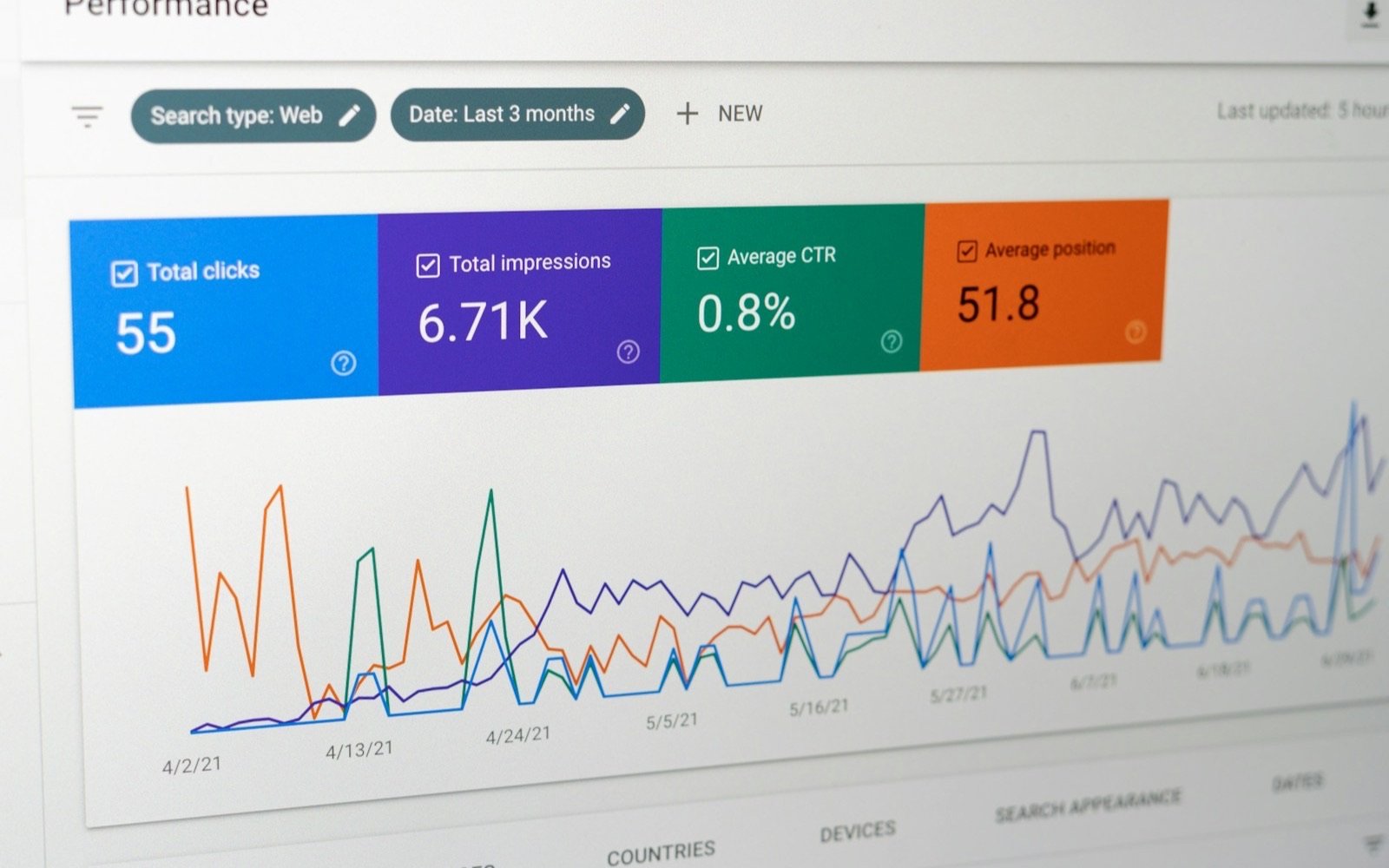
Google Search Console is free and is a direct source from Google for knowing whether your SEO is moving. It shows three basic numbers:
- Impressions: how many times your site appeared in results.
- Clicks: how many times someone visited from Google.
- Position: the average place you appeared for each search.
To start, open "Performance", choose the last three months and sort searches by impressions. Look for two cases: pages with many impressions and few clicks, and searches where you appear around position 8 to 15. The first call for a better title or description; the second, more content or better structure.
A position that rises without more clicks can have several causes; one is that the title doesn't invite people in. Check it once a month and measure trends month over month, not results day by day.
How long SEO takes
Nobody can guarantee a timeline. In its starter guide, Google indicates that some changes may be noticed within hours and others may take several months, and it recommends waiting a few weeks before judging whether something worked. It depends on how competitive your search is, the age and health of your site, and what you change.
A new site in a heavily contested search needs more patience than a business with an established Google profile and a less competitive search. If you want to know what it costs, we cover that in how much SEO costs in Mexico.
Common mistakes that cost a lot
- Buying links. Packages of hundreds of cheap links go against Google's spam policies; buying links can hurt your site instead of helping it.
- Believing someone who guarantees first place. Nobody controls Google's algorithm, and Google says there is no trick that guarantees first place. A position guarantee is a warning sign, not a trust signal.
- Changing domain or site without redirects. Every old address that doesn't point to the new one becomes a lost page, and you can lose part of what you had earned.
- Copying text from other sites. You add nothing new and give the search engine a reason to ignore you.
- Writing for the search engine instead of the person. Repeating the same phrase ten times only makes your page unreadable.
SEO and AI answers
People now also search by asking ChatGPT or by reading the AI answers Google shows at the top. The foundations are still the same: clear, useful content on a site that is easy for a machine to read. We detail the nuances in how to appear in ChatGPT and Google's AI answers.
Do it yourself or hire someone
You can start on your own. These four steps are within your reach:
- Complete your Google profile: correct category, hours, services, real photos, and ask for reviews from customers who actually bought from you.
- Add your site to Search Console and check that your main pages show as indexed.
- Write one clear page for each main service, covering what it includes, who it is for, which area you serve and how to contact you.
- Open your site on your phone using mobile data and confirm it loads fast and the contact button is visible without scrolling.
Ask for help when you've done that and don't know what's next, when your site has technical problems you can't diagnose, when you compete in a heavily contested search or when your time is better spent serving customers. When hiring, ask them to explain what they will do and how they will measure it. If you're torn between a freelancer and an agency, we compare them in SEO consultant or agency: which fits and what they charge in Mexico.
At Elevalia
In our SEO and positioning service we first review how your site and your Google profile stand, define which searches are worth pursuing for your business and work on the technical side, the content and your local presence. We measure with Search Console and show you what changed. We don't promise positions, timelines or sales, because they don't depend only on us. If you want to know where to start, write to us and we'll look at your case.